Monday, May 10, 2010

thank you dear


I am a happy mother..wife...daughter..:-)

Thanks hubby for the gift!

Sunday, May 9, 2010

Happy mothers Day

I dedicate this lovely poem to my mom...

I LOVE YOU MOM!

Mom's smiles can brighten any moment,
Mom's hugs put joy in all our days,
Mom's love will stay with us forever
and touch our lives in precious ways...

The values you've taught,
the care you've given,
and the wonderful love you've shown,
have enriched my life
in more ways than I can count.

I Love you Mom!

 Happy Mothers Day to all amazing moms out there!

Sunday, May 2, 2010

Bacalah Anakku

Both Batrisyia and Amsyar use Bacalah Anakku series when they starts learning to read...and I found it really good and easy way to teach them..The books comes with CD and also flash cards as an extra tool...The author of the book,Othman Ahmad and Nik Eliani are very experience in education world...Nik Eliani is a Co-writer of Siri Cepat Membaca Bacalah Anakku & Readeasy Early Reading Series, Reading Specialist & Nursery & Preschool Curriculum Designer. She holds B.A. Economics from Brock University, Canada(1985)& Diploma in Education(English) from International Islamic University Malaysia(1990), an ex-English teacher in secondary school.

Here are some tips from her :

1. Sesi bacaan mestilah pendek, 5-10 minit saja, 2 -3 kali sehari.

2.Berhenti sebelum jemu! kalau tumpuan anak 2 minit aje, 1.59 minit mesti stop.

3. Pilih tempat sesuai - jauh dari gangguan. Jangan ngajar depan TV. TV tu kalau tutup dengan kain hitam pun distract anak-anak.

4. Keep cool. Parentsla ye. Sebab saya cadang sesi ngajar pendek.. takut-takut parents yang tak boleh sabar.
5. Selalu puji masa ngajar. Lebih-lebih puji pun tak pe. Pandai sebut 'a", bagi hi-5.

6. Bila mengajar mesti ceria selalu. Jadikan sesi mengajar FUN. Buat Teknik Asosiasi Aksi, nyanyi lagu fonik & main seperti rebut-rebut bunyi, memory game dsbnya.

7.Kalau habis Buku 1, boleh belikan hadiah. Jack la sikit supaya dia seronok nak belajar Buku 2 pulak.

8. JANGAN LUPA, ajar 'BUNYI HURUF bukan nama huruf a(ei), b(bi, c(si).

9. Bila ajar baca perkataan, ajar GABUNG BUNYI, bukan ngeja sukukata atau hafal sukukata ba bi bu be be bo.

10. Akhir sekali, bila ngajar, ikut susunan buku.

Dan JANGAN SEKALI KALI PRESSURE anak. Seorang ibu atau bapa sepatutnya tahu samada anaknya dah ready atau tidak nak belajar membaca. Bila saya cadang boleh mula pada umur 3 tahun, kita pun terus ajar pada hari jadinya. Kita kena tahu tak semua ready nak belajar membaca pada umur 3 tahun. Sesetengah anak laki lambat sikit (which is true to me..., i'm not comparing Batrisyia and Amsyar...but i can see)


This is what she wrote too...
"Mengikut kajian luar negara, bahagian otak yang digunakan untuk membaca bagi kanak-kanak lelaki 5 thn adalah sama dengan kanak-kanak perempuan 3 1/2thn. Kedua anak lelaki saya memang lambat menguasai kemahiran membaca berbanding dengan anak-anak perempuan saya. Tetapi semenjak 12 tahun menerbitkan Baalah Anakku, saya telah bertemu banyak anak lelaki yang dapat membaca pada umur 4 tahun lebih"

You can read more about this at her blog www.cepatmembaca.blogspot.com. Amsyar is still catching up with reading...and hoping he can read well before he enters standard one next year! way to go boy!

Yes! Yaz!


YAZ?
Yes! It's a new contraceptive pills in malaysian market! not new actually... in the US has been available since 2006 and available across Europe as since September 2008. I'm not promoting it but..i'm using it for my family planning...it is a low dose..that's the reason why i like it and it is more suitable for me as i can't tollerate pills with higher estrogen dose...dizzy, nausea macam-macam rasa!

Yaz is the first oral contraceptive containing 3 mg of the unique progestin drospirenone combined with 0.02 mg of ethinyl estradiol in a new dosing regimen of 24 days of active hormone tablets followed by 4 days of hormone-free tablets. Beside contraceptive effects, it also shows to improve symptoms like bloating, swelling or weight gain related to fluid retention. You can have more regular and shorter periods and a decrease in the amount of blood you lose each month hence prevent you from getting anaemia and a decrease in period pain.
It also works in reduce acne too! It is licenced to use as an oral contraception, treatment of the emotional and physical symptoms of Premenstrual Dysphoric Disorder (PMDD) and treatment of moderate acne in women seeking contraception.

And what is PMDD?
Premenstrual dysphoric disorder or PMDD is a condition associated with severe emotional and physical problems that are linked closely to the menstrual cycle. Symptoms occur regularly in the second half of the cycle and end when menstruation begins or shortly thereafter. PMDD is not just a new name for premenstrual syndrome (PMS), a condition that affects as many as 75% of menstruating women. It is, however, considered to be a very severe form of PMS that affects about 5% of menstruating women. Both PMDD and PMS share symptoms in common that include depression, anxiety, tension, irritability and moodiness
It is the most expensive contraceptive pills currently in malaysia...cost about rm66.50 per month or per pack!
But it shows a lot of benefit too!

Saturday, May 1, 2010

Her first hair cut

Batrisyia had her first ever hair cut when she was about to enter standard one...end of 2008. I never cut her hair since she was born...and love her long waivy hair with curls at the end very very very much. It was so hard initially to wait for her hair to grew to shoulder length..up to age of 2 her hair still above the shoulder...and it was really curly and stuck to her head...later it becomes waivy with curls at the end...but she needs to sacrifice the hair before she entered standard one...difficult and i don't think it would be managable with long hair...she was iniatially reluctant to cut her hair but after pujuk-pujuk..she agreed...

six and a half year hair!


Every now and then i am maintaining the hair at her shoulder length only...may be when she grow up and can take care of her hair by herself she can have a long hair again! You look more mature with short hair darling!

Friday, April 30, 2010

Puffy Eyes

Tea : my home remedies for puffy eyes!

Green tea or black?
Both work well to soothe puffy, irritated eyes.

The difference?
Not much. Caffeinated teas help constrict blood vessels and reduce swelling, while herbal teas (especially chamomile) contain anti-irritants that soothe redness and inflammation. Steep 2 bags of your choice of tea in hot water for three to five minutes. Let cool until the bags are comfortably warm to the touch. 

Lie down, close your eyes, and place a tea bag over each eye; then cover with a soft cloth. During hot months,which applicable to our country weather... put the cooked tea bags in the refrigerator and apply to eyes when needed for a refreshing, eye-opening experience.


Give it a try!
Happy weekend everyone!

Thursday, April 29, 2010

Potty train. Is it the right time?


I am thinking to start potty training Arissa..she is 26 months now...is it too early? I used to start potty train my eldest around 30 months..and my son a bit later around 32 months...both were quite late. Thanx to  their 'superbusy mommy'! My girl was fast but my son was a bit lengthy at the process...but it was challenging, tiring, frustrating? along the way *sigh*. Hopefully i can get over it again with Arissa!

According to one of the reaserch, where the results were published in the Journal of Pediatric Urology, period between 24 and 32 months of age as most effective time frame for parents to begin toilet training lessons with their children. Additionally, the timing appeared to matter more than the specific training method used. 


What Expert Says?
Your child must be both physically and emotionally ready for potty train. Most children are ready when they are between 24 and 32 months of age, although every child is different. Toilet training usually becomes a long and frustrating process if you try to start it before your child is ready.

Before children can use the toilet, they must be able to control their bowel and bladder muscles. Some signs of this control are :
1) having bowel movements around the same time each day
2) not having bowel movements at night
3) having a dry diaper after a nap or for at least 2 hours at a time.

Children must also be able to climb, talk, remove clothing, and have mastered other basic motor skills before they can use the toilet by themselves.Most children are physically ready to toilet train before they are emotionally ready. Your child must want to use the toilet and be willing to cooperate with you. He or she may even talk about being a "big boy" or "big girl" and wearing underpants rather than diapers. Training generally does not go well if your child is in the stage where "no" is his or her automatic response to every request.

 
Some Tips to Potty Train...
  • Buy clothing that’s easy to remove and make sure you have plenty of spare pants.
  • Buy a couple of potties or a special training seat. Get into the habit of taking the potty with you wherever you go (you can buy travel potties).
  • Once you start, keep at it. It can be confusing for a child if you put him back into a nappy at night. Instead, buy a mattress protector and keep the potty by his bed. Leave the light on and keep fluids to a minimum before bedtime.
  • Create a special sign that means ‘toilet, please’.
  • Take him into the toilet with you so he can watch what you do.
  • Note the times of day when he usually goes and put him on the potty then. Try to create a routine, e.g. use it first thing in the morning, after lunch and last thing at night.
  • Praise him lots when he uses the potty – even if it’s only a dribble!
  • When he has an accident put his poo into the potty to show him how it is done. Then take him to the toilet to empty it, let him flush the loo and show him how to wash his hands afterwards.
  • Don’t make a big fuss if he has an accident – he will take it as encouragement to do it again.
  • Potty tricks – if you’re having difficulty getting your child to sit on the potty, buy a musical or magical one, that sings or lights up and turn it into a game.
  • Keep a goody bag so he gets a special treat each time he uses the potty.

How long does it take to potty train? 

A child is considered toilet-trained when he or she knows that it is time to go to the bathroom and is able to climb onto and use the toilet with little help. In a study of children who started training between 24 and 32 months of age, boys were fully trained at an average age of 38 months, while girls were trained slightly earlier, around 36 months.Your child will likely need help with wiping after a bowel movement until age 4 or 5. He or she may also need extra help in unfamiliar bathrooms, such as public restrooms, until about age 5 or 6

What if my child resists?

If your child resists using the toilet, he or she probably isn't ready. Sometimes potty training disruptions or delays are caused by stress or major changes in routine. Also, a child who is doing well with pottty training may suddenly have difficulty for no obvious reason. This is a normal part of potty training. It is best to start or resume potty training when your child is receptive to it and in a stable environment.
Your child's potty training experience should be positive. If it becomes a struggle or a battle of wills, it is best to ease up or stop for a while. Although you may be ready for potty training, your child may not be!

 Whenever you decide to start potty training your child, make sure it’s a good time for you - that you are not stressed and things are settled at home. All children are different so be patient and accept that it may take some time. Using training pants gives your child some control over when he wants to go, and may help encourage him to use the toilet more often. Always praise him lots - even if it's only a dribble! Children also love to flush the toilet and wash their hands with mummy and daddy so this is one way to turn it in to a good routine.

Wednesday, April 28, 2010

Facial Mask: A Must!

Me? not often and not routinely done!

Recently i discovered a wonderful face mask by jurlique.. An Intense Recovery Mask : A hydrating mask, clay-based cream mask, rich in the living energy of herbs and precious plant oils to clarify, revitalise and hydrate the skin, leaving the skin smooth, glowing and refreshed. Ideal for maintaining balance. It revives and detoxifies with kaolin (green clay), avocado oil, carrot root extract, green tea extract and grape seed extract  and many more! It has a soft herbal scent too! and so far....this is the best mask...really!

Why do we need to put a mask on our face?
Facial masks are more than just silly tricks that we,women try to get their 'beauty rest'. They are an important part of skin care. It is recommended that you use a facial mask at least once a week. A weekly facial mask session cannot only help your skin receive moisture, but it can also ease skin disorders thought it is not necessary to go overboard and wear one every night. Facial masks can be soothing or energizing, and the actions and rituals often involved with applying a facial mask can be an effective stress reliever.

How it works?
Facial masks are meant to cover the entire face and then remain in place for a few minutes before washing off.This allows the pores in the face to be cleansed deeply, getting rid of trapped dirt and oily build up. This can help reduce or even prevent acne. Additionally, many masks help slough off dead skin. The dead top skin is dull and lusterless. Younger, healthier cells are exposed as the faces surface when the mask is gently removed, bringing the top layer of dead skin cells of with it.This means tighter skin and a more brilliant complexion. It can also reduce the look of fine lines and small wrinkles too!

How you do it?
You can give your own face a gentle massage just prior to applying the mask, and if you are systematic about it, you can apply the mask in a way that is singularly soothing.To open the pores and allows the mask to do its thing, all masks should be applied to a freshly cleaned face, rinsed with warm water. Warm water is very calming and soothing, and many people find this part of the application to be one of the more enjoyable stages. Apply the mask in a circular motion until it covers the face. This is stimulating and calming at the same time. Let the mask sit on your face for 15 to 20 minutes (although some are meant to be worn all night). Just lie down and relax and you can enhance the effect by the addition of candles or incense and some soothing music. Finally, when it is time to rinse the mask, do so in cold water. This will help close the pores, protecting them against oil and dirt, and also energize your face.

Home made face mask?
Some people enjoy making their own facial masks from common household products like bananas (for wrinkles), honey (antibacterial) and avocados.As a remedy for dry skin, butter can also be used. Fruit purees also have different effects (for instance, strawberry can act as an alphahydroxy), and milk and yogurt can soften the skin. Oatmeal is extremely soothing and most sensitive skin can use masks of this sorts.It can be enhance by adding rose petal powder without the need for perfume, while citrus fruit peel powder acts as an astringent.

When we decide to make use of  facial masks, we are certain to feel the good effects of it later down the road. You can help keep your face healthy-looking and your complexion brilliant with a healthy-glow if we apply them once a week!

So ladies! A facial mask is a must!


Sunday, April 25, 2010

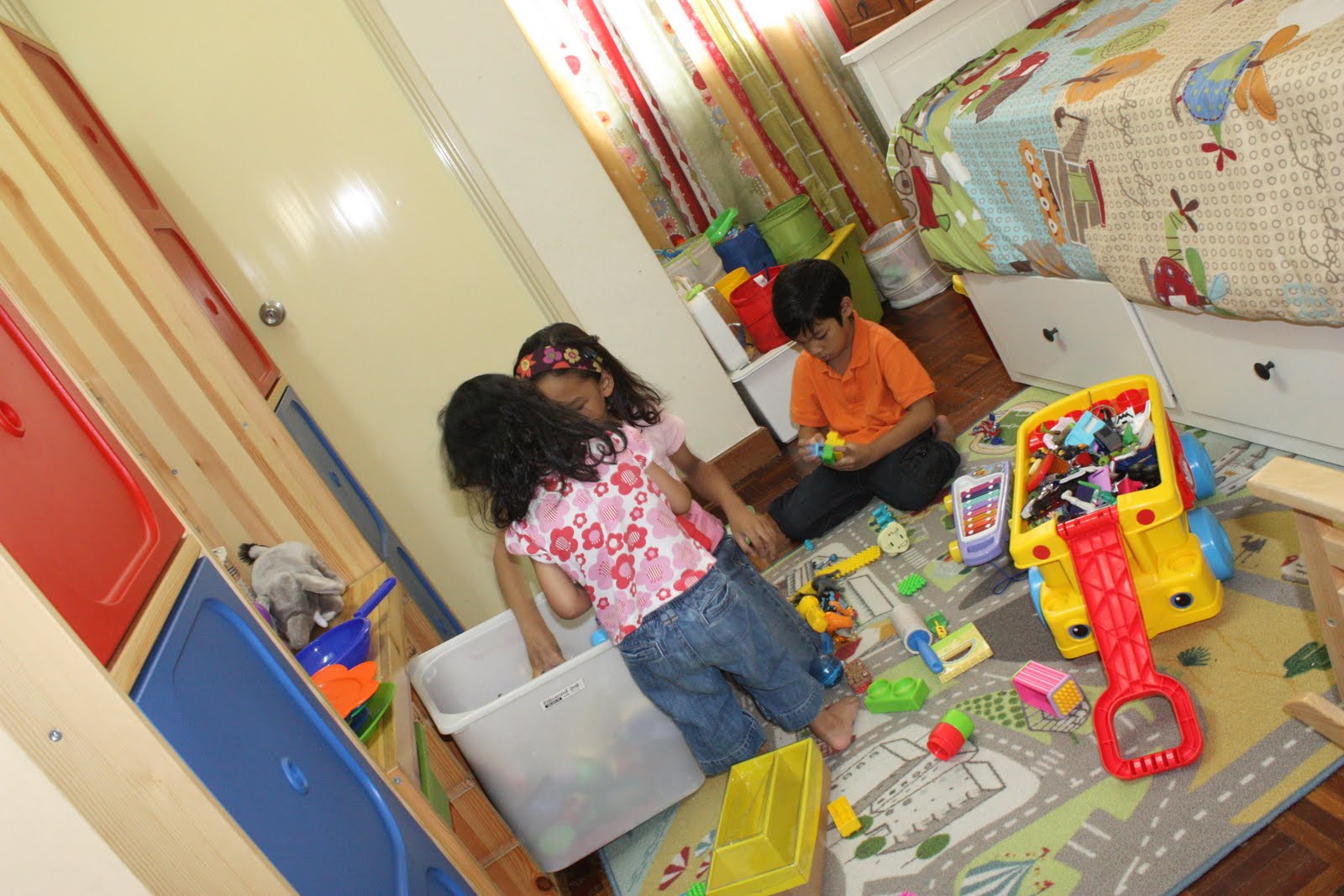
before and after

Yes, children and messes go hand in hand. Same goes to my kids. But one of the ways you can raise good kids is to teach them responsibility, the first and simplest being to have them clean up after themselves. Me, not always hihi and hubby always make sure the kids clean up the playroom after they play and before we leave the house and we need to be consistent about cleanup rules and not to give in to the inevitable whining or tears...nampak cam kejam je tapi lama-lama jadi habit...my hubby yang lagi strict pada i..hahaha! sometimes i just said "biar jelah...nanti balik we cleanup" hubby said " no! no! no! cleanup first before we leave! "yes sir!" It took sometimes actually to dicipline them...especially the boy, amsyar...not easy job too!


before
Here are some of the  Cleanup Tips:
  • Make cleanup fun. Lessons about responsibility shouldn't be a drag—they should be fun! So whenever possible, turn cleanups into a game. It's not about you telling them what to do, it's more about cooperation.
  • Set a timer. See if your kid can get the most toys put away by the time the bell dings. If you have two or more kids, even better! Their sense of competition will kick in almost automatically. Whoever finishes first can get a small reward!
  • Customize their storage boxes. Whatever containers hold your children's toy, see if you can get them to decorate it with pictures of what's supposed to go inside. This will give them a sense of ownership and pride, and they'll be more apt to maintain them. 
What do children learn by doing chores?
Children learn a lot by doing chores. They learn responsibly, and the value of doing monotonous work. This sets them up for adult life, and helps them cope with the stresses of juggling a career and household chores.

Children who do not do household chores generally have a much more difficult time adjusting to life when they leave home and start university or working. These children are too used to having a mother and father do everything for them, and they do not progress when it comes to secular life.

Children who do household chores will generally have a much cleaner home than children who do not  do household chores when they are young. These children will know the value of having a clean house as opposed to a dirty house. Children will then have to brush up on their cleaning skills, and also learn to cope with doing housework.

Housework teaches children many things. They learn to cope with a task that is not very pleasant, and this gets them success in their career lives and also academic life. Housework can be compared to striving for excellence. A child who is taught to do clean and tidy work will one day strive for excellence in any field than a child who is not patient and just does things to suit him or herself.

Housework also teaches children the value of doing things for themselves, and not relying on others likes servants or maids for help. This is very true as many young children today get spoilt and are all too used to getting the help to do the little chores that they can do for themselves. Children also learn to clean up after themselves and this is in no way a bad thing but a very good thing.

Housework teaches children how to be responsible. Responsibility cannot be stressed enough. Children need to be able to juggle doing schoolwork and housework. This actually teaches them how to multi task, and multi tasking is a very valuable skill which is still used in many organizations today.

Housework is not for the lazy, and children learn to train their minds to do the work even when they just do not want to complete a monotonous task. This is all too real, especially with the children nowadays who constantly want some kind of stimulation.  Children should be able to do housework. It is for their own benefit in the long run.

 after
    The challenge is to have your kids clean up after themselves, all day, no matter what! Remember to make cleanup for fun for them so they actually look forward to it!

    Happy Cleaning! (To your child, not you!)

    Thursday, April 22, 2010

    model in the making

    Enjoy my angel Arissa's photos...as i'm enjoying watching her....

    LinkWithin

    Related Posts with Thumbnails